
Rescue Talk™
Are You Prepared for a Trench Emergency at Your Facility?
Working in and around trenches is a routine part of life in many industries. Industrial maintenance projects, utility work, construction activities, and municipal water or sewer repairs all rely heavily on excavation work. Because trenching occurs so frequently, it can begin to feel like just another part of the job. When that familiarity sets in, however, the hazards can start to blend into the background. The reality is that trench work remains one of the more dangerous activities performed on a job site. Soil conditions change quickly, excavations are inherently unstable environments, and a collapse can occur with very little warning. What begins as an ordinary task can become an emergency in a matter of seconds.
OSHA has long recognized the seriousness of trench hazards and in 2018 placed trenching and excavation work under a Special Emphasis Program. Programs like this are used when the agency sees a pattern of severe injuries or fatalities that requires focused enforcement and education. In practical terms, it means trench safety continues to receive significant attention from regulators because incidents are still occurring across the country. The goal of the program is straightforward. OSHA concentrates outreach, inspections, and enforcement efforts on trenching operations to encourage compliance with safety standards and to prevent cave-ins that can seriously injure or kill workers.
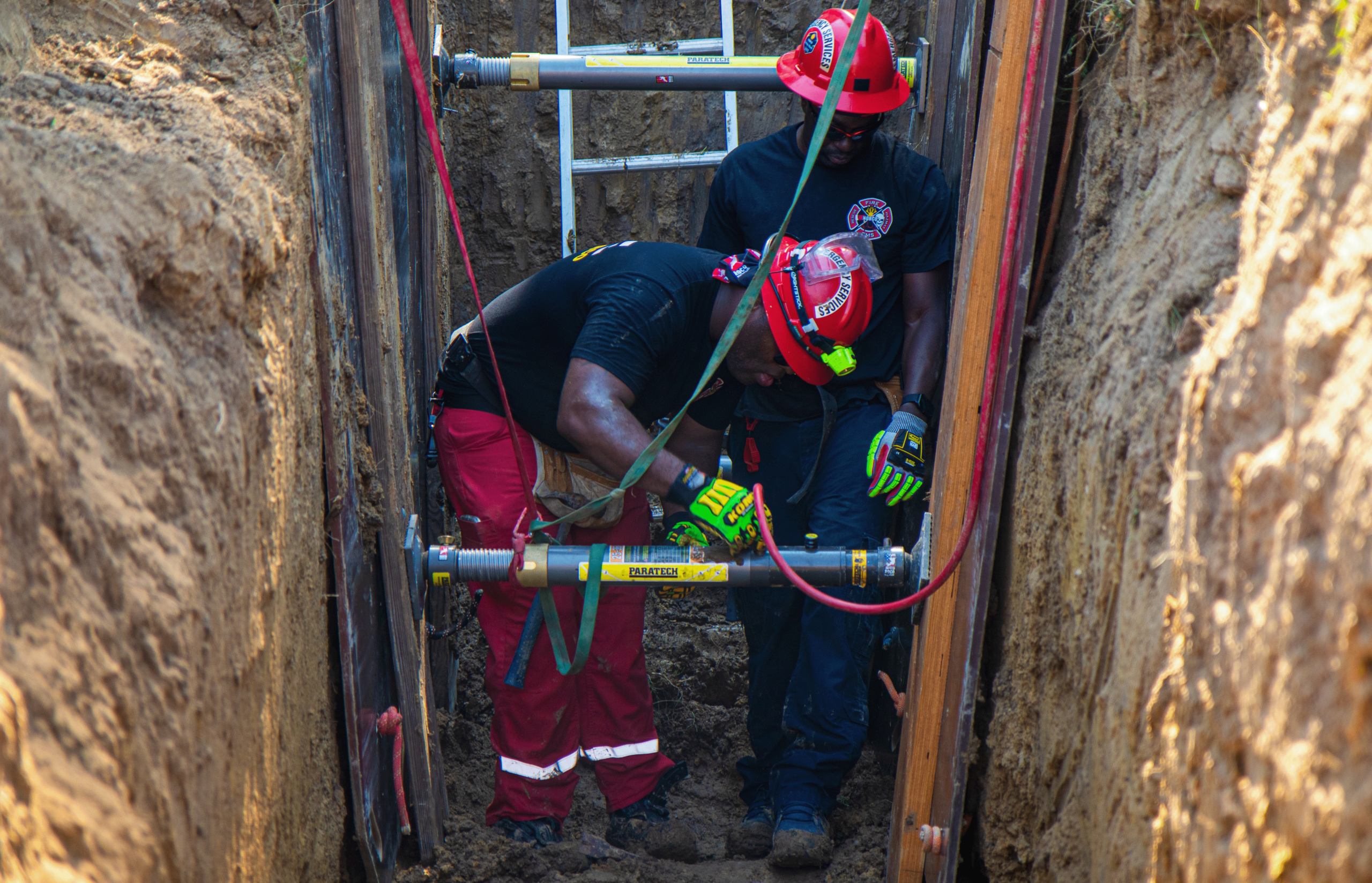
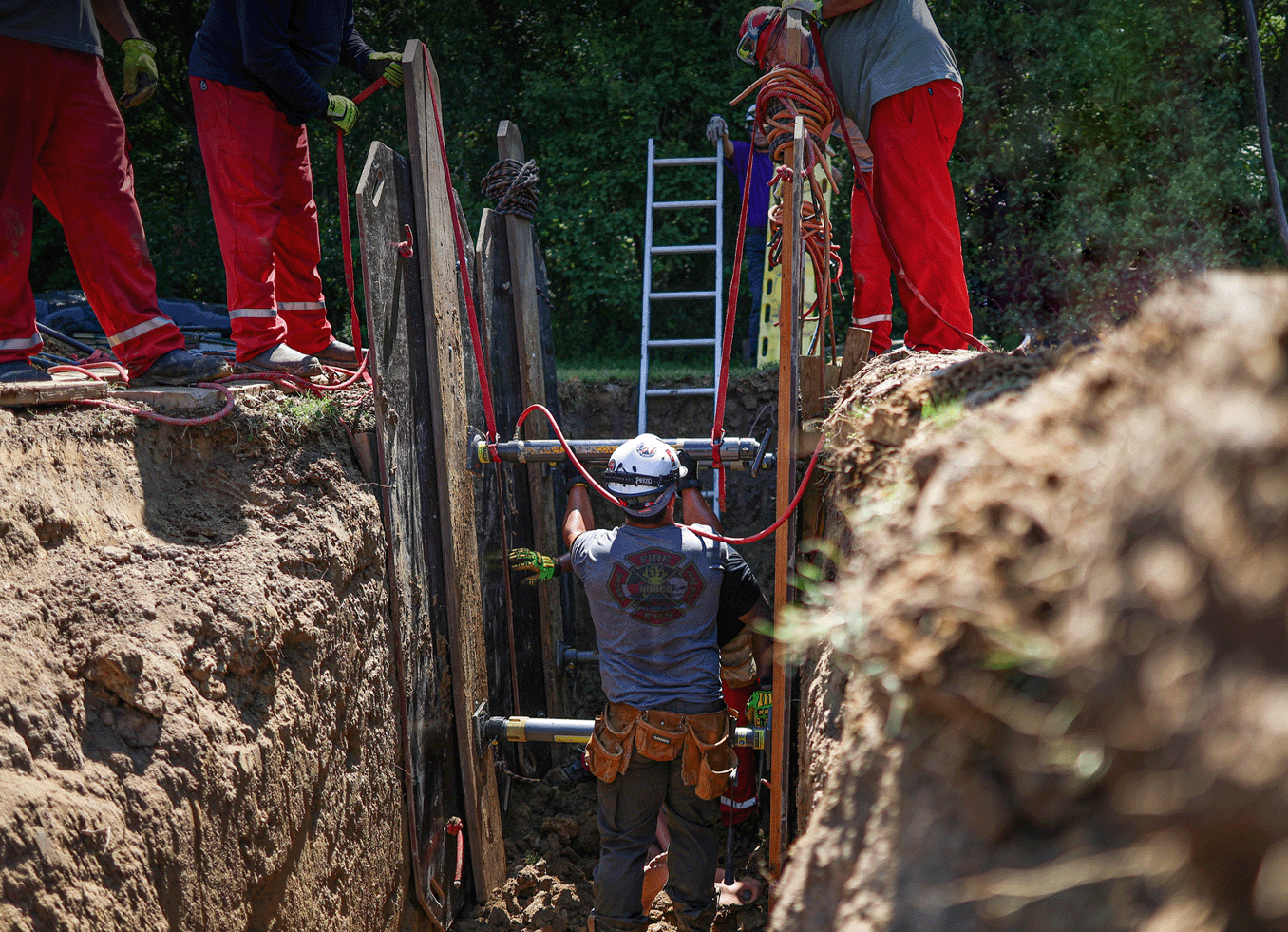
At the center of those safety requirements is the individual OSHA refers to as the Trench Competent Person. This person is responsible for identifying hazards, evaluating soil conditions, and ensuring that appropriate protective systems are in place before workers enter the trench. The Competent Person must also have the authority to take corrective action when unsafe conditions are discovered. In practice, that means stopping work when the excavation is not safe, verifying that protective systems such as sloping, shoring, or shielding are properly installed, and ensuring that the crew understands the precautions required for the operation. The role carries real responsibility because the safety of the workers entering the trench depends on the Competent Person’s judgment.
That responsibility does not end once the trench has been opened and the initial inspection is completed. OSHA requires that excavations be inspected daily by the Competent Person and again whenever conditions change. Weather events such as rainfall can significantly affect soil stability, and water introduced into the trench can weaken the surrounding ground. Vibrations from nearby equipment or changes to the excavation itself can also alter conditions in ways that are not immediately obvious. A trench that appeared stable the day before may become hazardous after environmental conditions shift or after surrounding soil has been disturbed. Because of this, consistent inspection and evaluation are critical parts of maintaining safe trench operations throughout the duration of the project.
Safe trench work also depends on several layers of training and awareness across the entire crew. The Competent Person must have the technical understanding to properly classify soil, recognize hazards, and determine when protective systems are required. Workers who enter the trench should also understand the hazards associated with excavation work and the precautions that have been put in place to protect them. That awareness includes understanding the location of protective systems, recognizing warning signs of instability, and knowing how to exit the trench quickly if conditions begin to change. When everyone involved in the operation understands both the risks and the safety measures in place, the likelihood of a serious incident is greatly reduced.

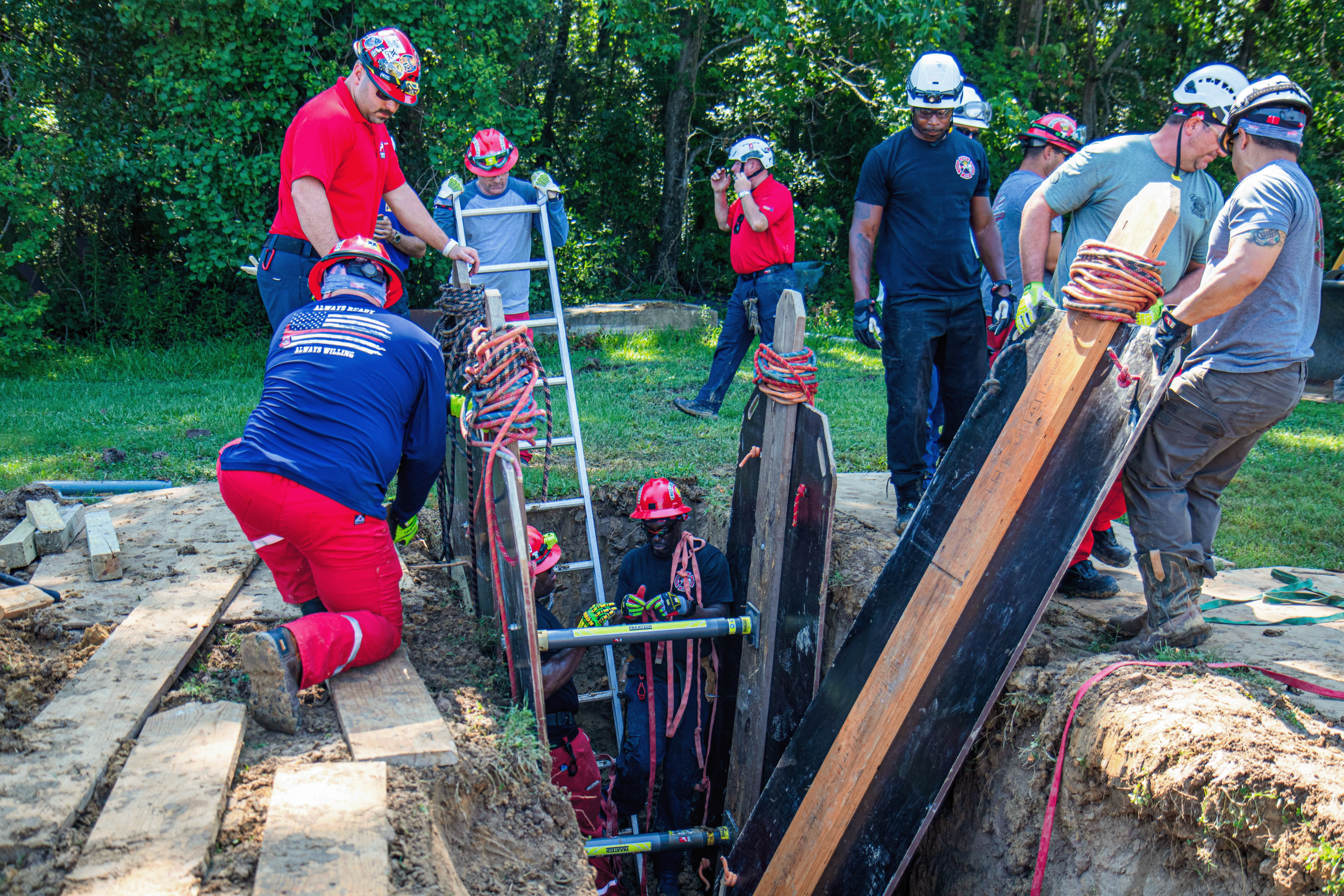
A critical, and often overlooked, component that deserves careful consideration is rescue capability. When a trench collapse occurs, events unfold quickly and the situation becomes extremely dangerous. Soil is far heavier than many people realize, and even a partial collapse can trap or bury a worker in seconds. Because of the forces involved, trench rescue operations must be performed carefully to avoid causing additional collapse or placing rescuers in danger. Specialized training, equipment, and procedures are required to perform these rescues safely.
“That means rescue planning should be part of the discussion before excavation work begins rather than something considered only after an emergency occurs.“
Facilities often assume that local emergency responders will be able to manage a trench rescue if one becomes necessary. While local departments provide valuable emergency services, trench rescue falls within the specialized discipline of technical rescue. Not every department has trench rescue capabilities or maintains the equipment required to perform these operations safely. This reality is something that both facility leadership and the Competent Person should consider when planning trench work.
There are also several basic trench safety practices that continue to appear in incident investigations when something goes wrong. Trenches that are five feet deep or greater typically require a protective system unless the excavation is made entirely in stable rock. Protective systems such as sloping, shoring, or trench boxes are designed to prevent the trench walls from collapsing inward. Spoil piles should be placed at least two feet back from the edge of the trench so that the additional weight does not increase pressure on the excavation walls. Before workers enter the trench, the space should also be evaluated for hazards such as water accumulation, oxygen deficiency, or harmful gases that may develop during excavation activities.
Safe entry and exit from the trench is another detail that deserves attention. OSHA requires that ladders, ramps, or other means of egress be provided in trenches that are four feet deep or greater. These access points must be positioned so that workers do not have to travel more than twenty-five feet to reach them. The purpose of this requirement is simple.
“If conditions change quickly or a worker needs to exit the trench in an emergency, a safe path out must be available no more than 25’ from the workers’ location.“
Trenching and excavation work will always be part of industrial and construction operations. The key to performing this work safely lies in preparation, awareness, and realistic planning. Workers must understand the hazards involved, the Competent Person must have the training and authority to maintain safe conditions, and the facility should have a clear understanding of how an emergency would be handled if a collapse were to occur. Taking the time to consider these factors before excavation begins can make a significant difference in preventing injuries and ensuring that everyone involved in the operation returns home safely at the end of the day.
Before the next trench is opened at your facility, it may be worth asking a few practical questions.
- Who is responsible for signing off that the protective system is safe and that OSHA requirements are being met?
- What training has that individual received to properly evaluate trench hazards and excavation conditions?
- If a collapse were to occur, who would respond with the technical training and equipment necessary to perform a trench rescue?
Addressing those questions ahead of time is an important part of making sure trench work is conducted responsibly and safely.
Want to learn more? Check out our Trench Rescue Technician course.
Or, you can contact us about Trench Competent Person training. Just send us an email to info@rocorescue.com.