Rescue Talk™
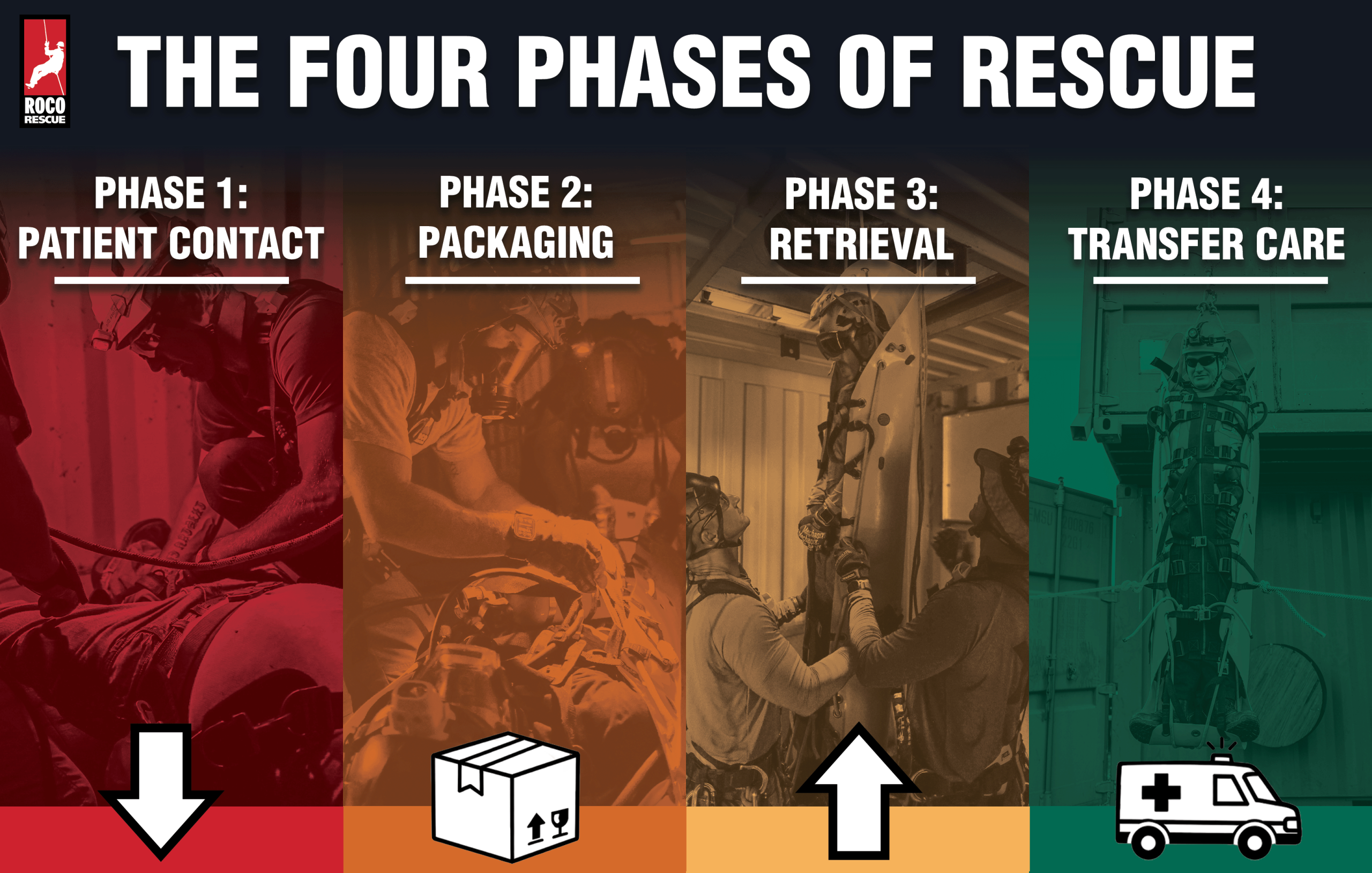
The 4 Phases of Rescue
Spend a few minutes watching a rescue team work through a scenario and you’ll start to notice a pattern. Tripods go up, someone pulls the SKED out of the bag, and a haul system starts taking shape. Before long there’s a little mountain of equipment building up around the entry point. It looks busy. It even looks productive. But what’s the use if the team doesn’t know what the patient needs?
Roco Chief Instructor Mike Adams says he saw that exact situation play out again and again while teaching rescue classes. Teams would begin setting up systems, unpacking equipment, and preparing litters before anyone had even made contact with the patient.
After watching that pattern repeat itself enough times, Adams began looking for a simpler way to organize the work. Something that would help teams focus on the right tasks at the right time without getting tangled up trying to do everything at once. The result became a framework: The Four Phases of Rescue.
The concept is straightforward. Break the rescue into four operational phases: (1) Entry, (2) Packaging, (3) Retrieval, and (4) Lowering. Each phase has a clear objective. When rescuers understand which phase they are in, they stop worrying about tasks that belong later in the rescue and concentrate on what actually matters at that moment. Instead of chaos, the work begins to flow.
Phase 1: Entry
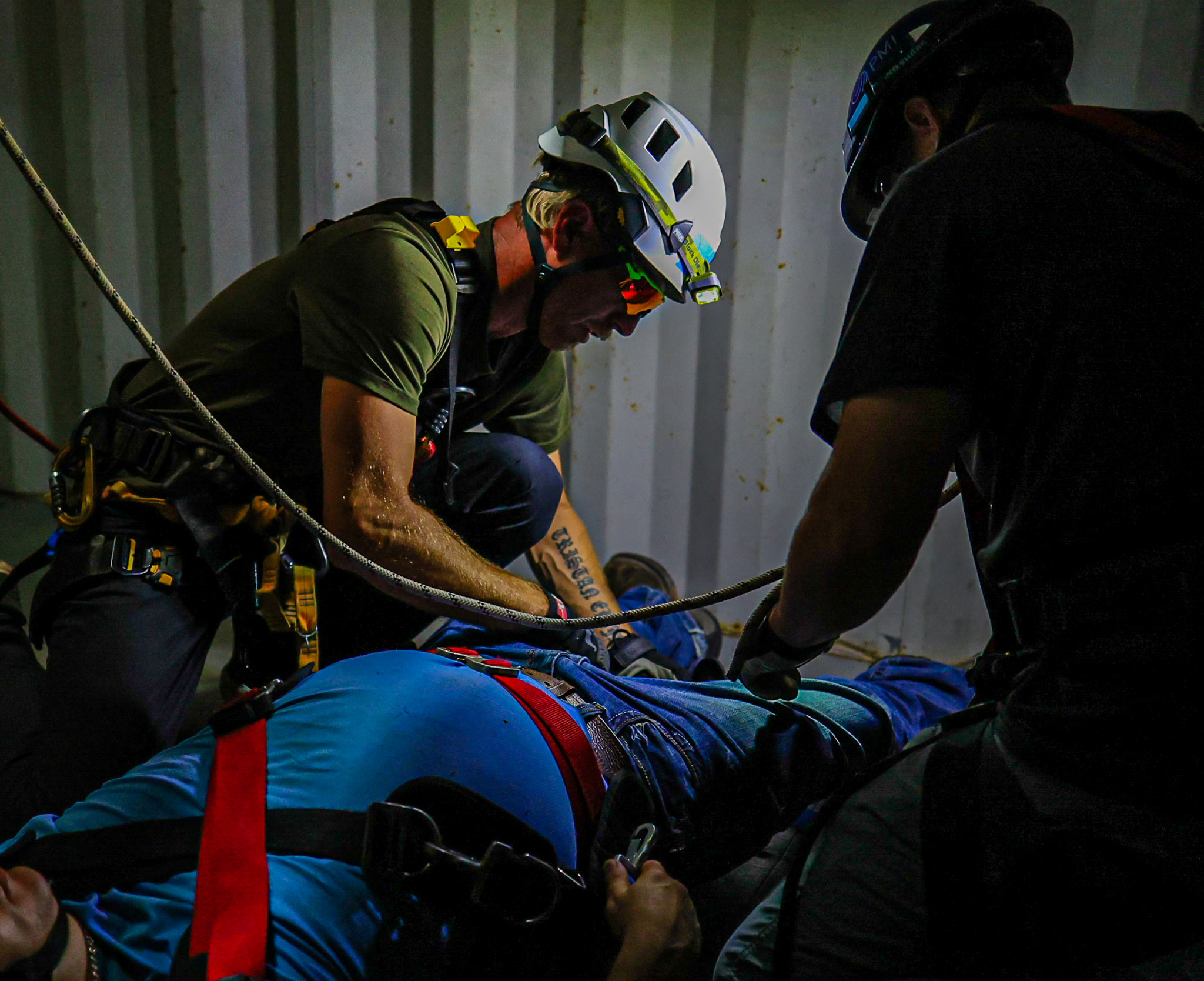
Mike says, “The first phase has one goal: To get a rescuer to the patient as quickly and safely as possible.”
Once the area has been deemed safe for entry, equipment requirements are surprisingly minimal. Adams teaches that all that’s needed to reach the patient is a main line, a safety line, and a retrieval capability. That’s enough to safely lower a rescuer into the space and establish contact.
Many teams instinctively begin setting up complex systems before anyone has reached the patient. The first instinct of most new rescuers making a vertical entry is to set up a high point for the lower. In many cases, however, a low-point lower can get a rescuer to the patient much faster. While the intention is good, it often slows the rescue down.
“Until someone reaches the patient, the team doesn’t actually know what equipment will be required.“
Is the patient conscious? Are they injured? Are they already wearing a harness that could be used for removal? Those answers determine the rest of the rescue, and the only way to get them is by sending a rescuer in.
Once patient contact is made, the rescue begins to take shape.
Phase 2: Packaging
Once a rescuer reaches and assesses the patient, the team has the information needed to move to the second phase.
Now the team can base their packaging decisions on the condition of the patient and the space, rather than assumptions. If the patient reports a fall and possible spinal injuries, more rigid packaging may be required. If the patient is alert and already wearing a viable harness, the rescue may be much simpler. Either way, the goal is to eliminate wasted movement.
Adams recalls watching teams bring an entire SKED, still rolled up, into a confined space only to discover there wasn’t enough room to unroll it. Instead, he encourages teams to send equipment as it becomes necessary. For example, if spinal motion restriction is required, the backboard can be lowered first while the rest of the packaging system is prepared above.
While the rescuer is packaging the patient, the rest of the team can begin preparing the next phase of the rescue.
Phase 3 : Retrieval
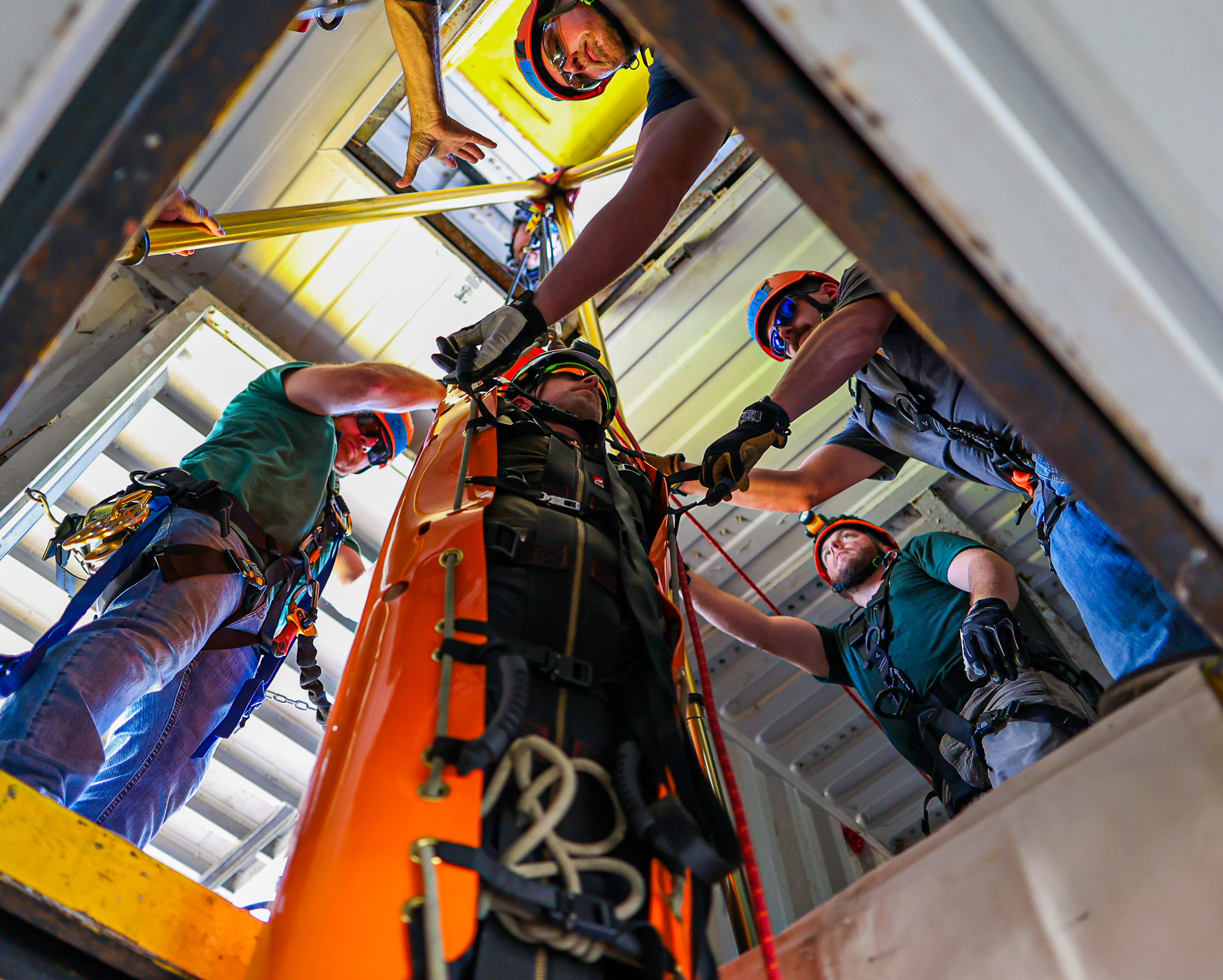
Once packaging is underway, the team begins planning the retrieval phase. This phase focuses on building the system that will remove the patient from the space. Ideally, this happens simultaneously with Phase 2, giving the team that “good overlap” that can make a big difference in patient outcomes.
Imagine spending several minutes stabilizing, repositioning, and packaging an injured patient only to discover the ride out hasn’t even been set up yet. That’s the type of delay disorganized teams run into time and time again.
The environment usually determines what that system looks like. Is there a natural high point available? Do you need to deploy a tripod? What mechanical advantage system makes the most sense given the anchor points and space available?
“Adams notes that teams often lose valuable time by trying to build these systems during the entry phase.”
In many cases, a rescuer could already be inside the space gathering information while the team prepares the retrieval system above.
Once the retrieval system is ready, the patient can be safely removed from the confined space.
But the rescue still isn’t finished.
Phase 4 : Lowering (Transfer Care)
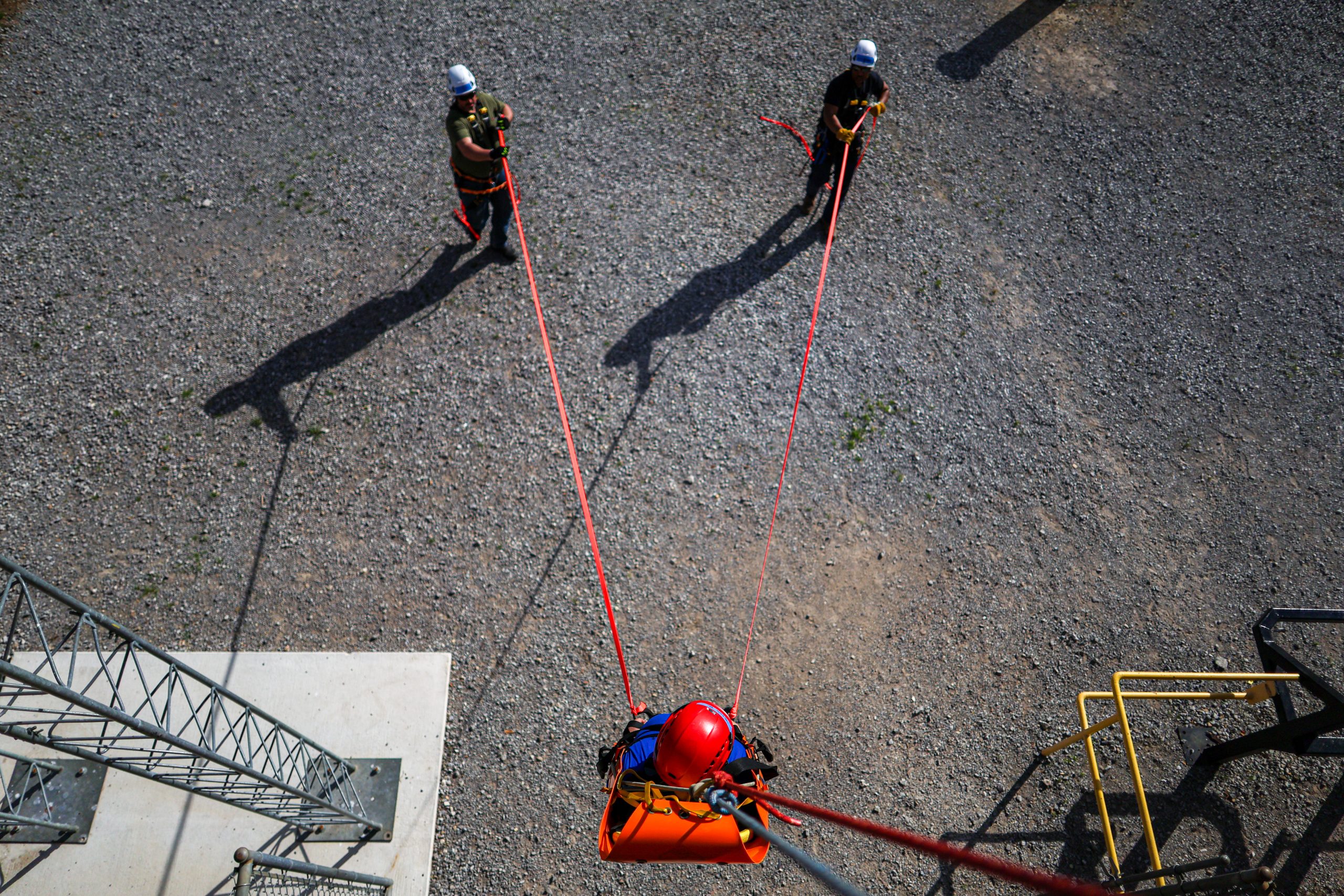
The final phase is one that many teams overlook. Getting the patient out of the space does not complete the rescue. The patient still needs to be safely moved to where EMS can continue care and transport.
During training scenarios Adams often asks a simple question: “Where’s EMS?” In a dream scenario, the transport unit is staged by the space, waiting for the patient to exit with engine running and a stretcher ready, but that is rarely the case especially in the industrial world. Once removed from the space, an additional move is often required.
The lowering phase ensures that a landing area is identified and that the team has a plan for safely transferring the patient from the vertical environment to ground-level care. When this phase is considered early, the transition happens quickly and smoothly.
The Key
Structure relieves mental load. Technical rescues involve dozens of moving parts. Systems, equipment, patient care, communication, and environmental hazards all compete for attention at the same time. Without structure, it’s easy for teams to become overwhelmed and lose focus.
The Four Phases framework provides a simple mental roadmap. Instead of trying to solve every problem at once, the team works through the rescue step by step while allowing appropriate overlap between phases. The team leader stays one phase ahead while rescuers focus on the work in front of them.
The result is a rescue that moves smoothly.
So if you’re struggling to find the method in all the madness, try the Four Phases. You may find that a little structure is all it takes to help your team move faster, work smoother, and improve patient outcomes.
Want to learn more?
Check out our Rescue Essentials™ Course.

Mike Adams is a Chief Instructor with Roco Rescue and a longtime member of the instructional team. He brings decades of experience in technical rescue and specializes in confined space and rope rescue training. Mike studied Fire Science at LSU Eunice and holds certifications as a Confined Space and Rope Rescue Technician.