Roco Rescue joins with thousands of emergency responders across the nation and around the globe in mourning the loss of Mr. Bud Calkin, founder of Skedco, Inc.
(more…)Working in and around trenches is a routine part of life in many industries. Industrial maintenance projects, utility work, construction activities, and municipal water or sewer repairs all rely heavily on excavation work. Because trenching occurs so frequently, it can begin to feel like just another part of the job. When that familiarity sets in, however, the hazards can start to blend into the background. The reality is that trench work remains one of the more dangerous activities performed on a job site. Soil conditions change quickly, excavations are inherently unstable environments, and a collapse can occur with very little warning. What begins as an ordinary task can become an emergency in a matter of seconds.
(more…)It’s not often you get called for a rescue right next door, but this is literally what happened for firefighters assigned to Baton Rouge Fire Department Rescues #1 and #2. They were just finishing up a training session at FD Headquarters when a call came in for a medical emergency/rescue directly across the street. And it also happened to be directly behind the Roco Training Center.
(more…)Spend a few minutes watching a rescue team work through a scenario and you’ll start to notice a pattern. Tripods go up, someone pulls the SKED out of the bag, and a haul system starts taking shape. Before long there’s a little mountain of equipment building up around the entry point. It looks busy. It even looks productive. But what’s the use if the team doesn’t know what the patient needs?
(more…)Massachusetts-based construction contractor assessed $4.6M in proposed penalties.
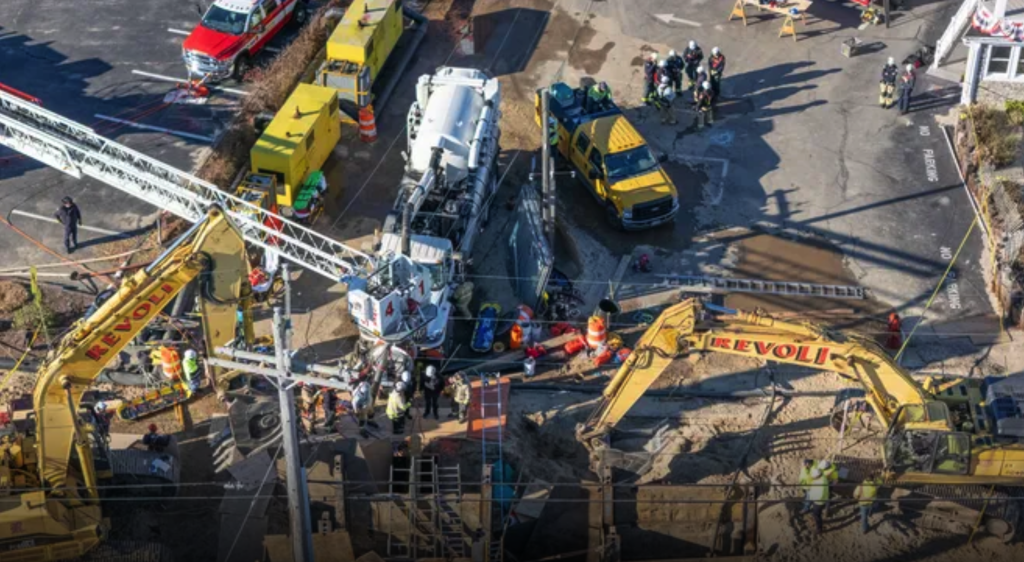
OSHA has cited a water and sewer line construction contractor for willfully and repeatedly exposing workers to trench hazards. Proposed penalties of $4.6M were assessed against the company in a trench collapse in 2025 that claimed the life of an employee and seriously injured another at a Yarmouth worksite.
OSHA’s investigation into the incident found that workers were removing sandy soil and installing steel plates outside of a trench. While working, the backfilled sand collapsed and trapped two workers inside the trench. One worker was engulfed and sustained fatal injuries.
‘”This cave-in is a solemn reminder of the dangers construction workers face when basic safety procedures and safe engineering solutions are ignored,” said U.S. Secretary of Labor Lori Chavez-DeRemer.
“We will continue holding employers accountable and providing resources dedicated to hazard training and required engineering controls to put a stop to these preventable tragedies.”
A total of $4,699,362 in proposed penalties was issued against the company placing emphasis on these careless and fatal trenching hazards.
According to OSHA, the agency cited the employer with seven willful citations, 33 repeat, and 17 serious violations including:
- Failing to provide workers with a safe way to exit the trench.
- Lack of adequate cave-in protection.
- Having unsupported underground utilities.
- Maintaining spoil piles within two feet of an excavation.
- Neglecting to install a shoring system per the design.
- Using a damaged protective system.
- Exposing employees to numerous electrical and fall hazards.
Trenches and excavations are witnessed daily from local neighborhoods to large construction sites. Far too often, carelessness results in needless injuries and deaths. Another important question to consider is whether or not the emergency responders have the training or equipment to deal with such an emergency. Extreme caution must be taken – especially when dealing with a trench that is already very unstable.
Two crew members were killed and two others injured during a confined space incident aboard a barge in southeast Alaska. According to the Coast Guard, the crew entered a confined space and lost contact with others on the tug. Initial information from family indicates methane gas may have been present, though details are still under investigation.
The crew had been preparing the barge ahead of incoming weather when the incident occurred. Other crew members were able to remove one victim and assist the two survivors before rescue teams arrived. The barge was later moved to Ketchikan, where the second victim was recovered after the space was cleared.
The incident occurred approximately 25 miles northwest of Ketchikan while the barge was moored. After losing contact, the tug crew contacted the Coast Guard for assistance and began initial recovery efforts before responders arrived on scene.
One of the deceased was 28-year-old who had recently started working for the company. The two surviving crew members were later reported to be in good condition, and the causes of death have not yet been released.
Between 2011 and 2018, 1,030 workers died in confined spaces in the United States alone. More than 60% of those deaths were tied to hazardous atmospheres. In many cases, the air either wasn’t properly monitored, or it changed after entry. A space can meet acceptable entry conditions at the start of the shift and still become dangerous later. Conditions outside the space or even the work inside the space can create hazards. Atmospheres are dynamic and we should treat them that way.
In the field, we still see the same habit. The monitor comes out for the initial check, readings look good, and then it gets pulled out, clipped off, or turned off and set aside. The assumption is that “it tested fine” so it will stay fine. Continuous monitoring is one of the simplest and easiest actions you can take to save lives in confined space work. Modern meters will run all shift and more. If you bought it, you’re not paying more to run it. If you rented it, get your money’s worth. If the space can change, our monitoring has to account for that. So, keep those monitors running. Make sure those acceptable entry conditions are met the entirety of any entry. And, remember, there’s a safe way, and a safer way.
Not every rescue ends the same way. Sometimes the patient walks away, sometimes they’re packaged and transported, and unfortunately, sometimes the outcome is a recovery operation instead of a rescue. At the end of the operation, everyone takes a moment to catch their breath, replaying moments in their head. The outcomes may differ, but one thing is consistent:
“…every operation leaves behind potential lessons, whether teams take the time to capture them or not.“
After-action reviews exist to make sure those lessons are not lost. They are not about blame or ego, but rather about documenting while it is still clear, before time, fatigue, and selective memory start to smooth over the rough edges of what actually happened.
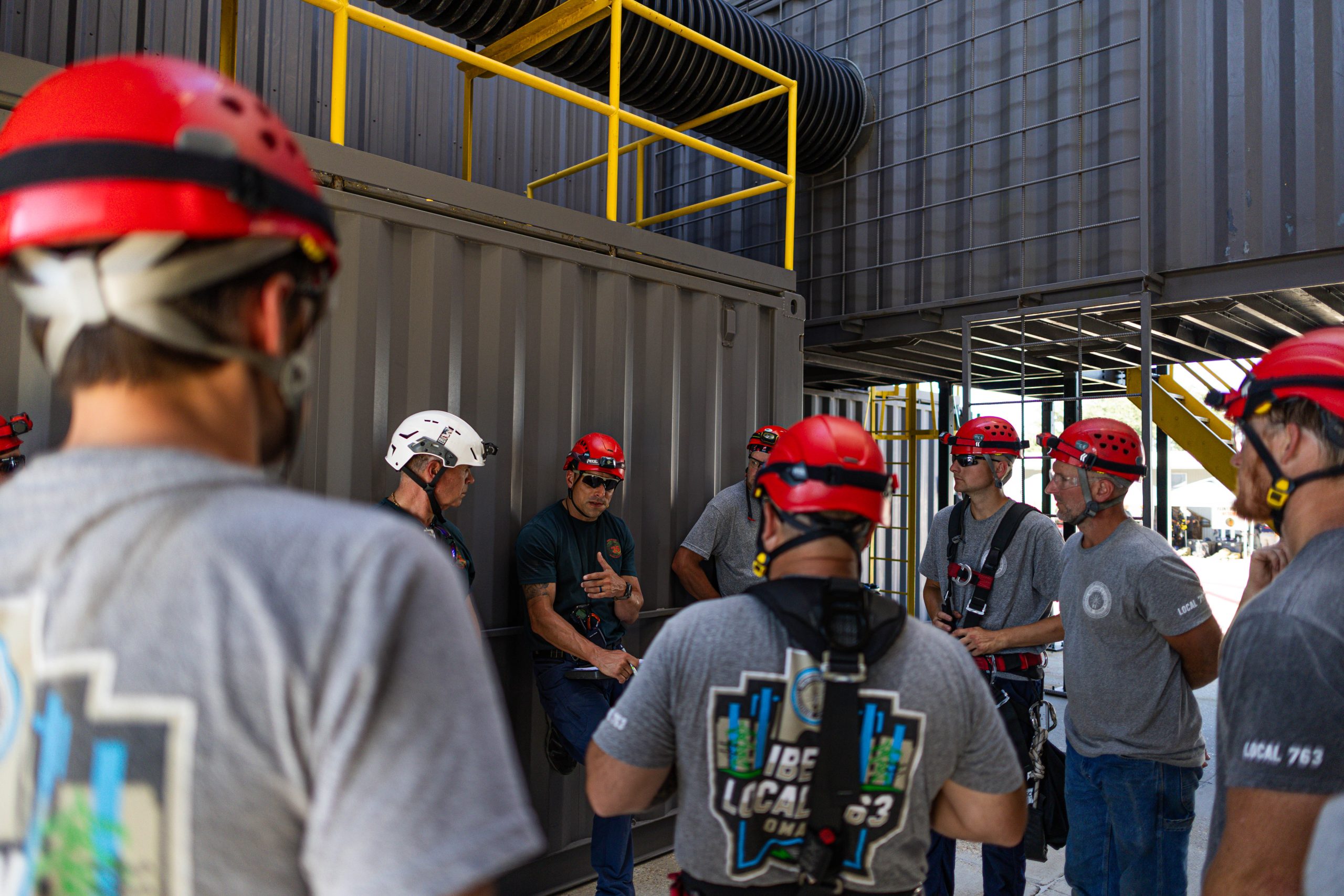
Technical rescue operations can be messy by nature. Plans evolve, conditions change, unforeseen circumstances or obstructions arise, and decisions must be made without all available information. Even well-trained teams occasionally experience breakdowns like miscommunication, assumptions that went unchallenged, or blind spots not recognized. Perhaps it was a technique that was more difficult or time consuming to deploy than expected. In the moment, these issues often feel manageable. Later, they are easy to dismiss altogether. However, taking time to reflect on these obstacles is a major opportunity to learn and grow from in the future.
A structured after-action review forces teams to slow down and look at those details without the pressure of the incident itself. It creates a controlled environment to ask hard questions. What did we expect to happen? What actually happened? Why were those two things different? The focus stays on systems, planning, and execution, not individual shortcomings or failures. Effective after-action reviews are disciplined and honest. They acknowledge constraints that existed at the time instead of judging decisions with the benefit of hindsight. They also recognize what went well. Reinforcing good decisions and effective coordination is just as important as identifying gaps.
“The focus stays on systems, planning, and execution, not individual shortcomings or failures.“
Consistency in performing after-action reviews matter far more than the formality or structure of the review itself. Teams that only conduct after-action reviews after major incidents miss opportunities to improve on routine responses, training evolutions, and even just standby operations without actionable rescues. Those smaller reviews build habits that carry over when major incidents require review.
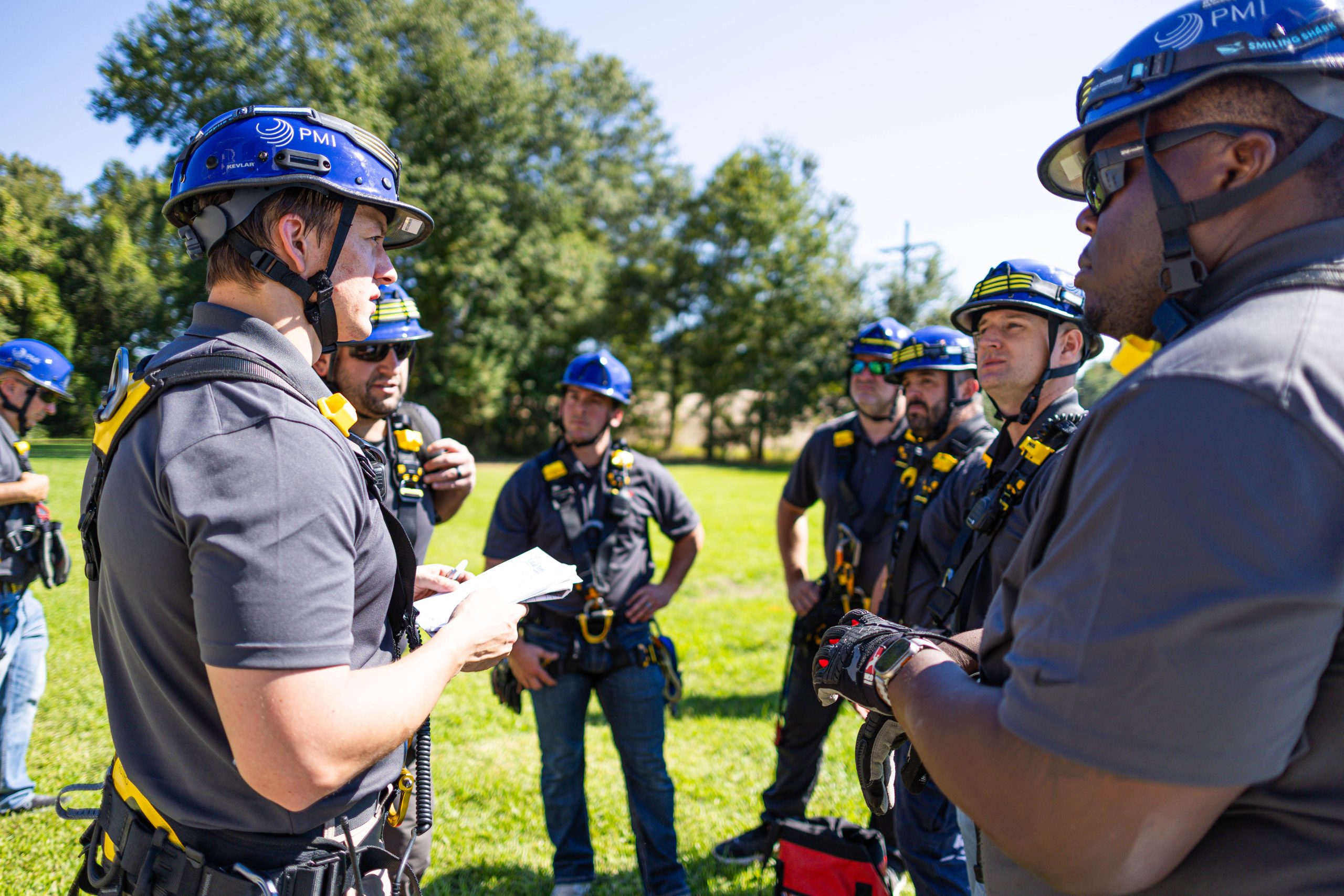
The real value of an after-action review shows up in what happens next. If the same communication issues, access problems, or equipment limitations keep appearing, the review process is failing. Lessons must translate into changes in training, preplans, equipment choices, leadership abilities, and rescue strategies. Reliance on experience alone does not equal improvement. Progress comes from deliberate learning. After-action reviews are one of the simplest and most effective tools teams have to turn experience into continuous improvement. The goal is not to rewrite history or reach perfection, but rather to be better prepared for the next rescue, especially the one that does not go according to plan.
Five Ways to Make Your After-Action Reviews More Effective
1. Keep the focus on systems, not people.
If reviews turn into personal attacks, honesty and participation disappear. Focus on procedures, assumptions, communication pathways, and decision points. When teams feel safe speaking openly, the quality of information generally improves.
2. Capture feedback while it is fresh.
Waiting days or weeks allows memory to rewrite events more favorably than they actually occurred. Conduct the review as soon as practical, even if it is informal. Early observations and discussion are usually the most accurate.
3. Ask the same core questions every time.
Consistency matters. Use a simple framework and stick to it:
- What was planned?
- What actually occurred?
- What caused the difference?
- What went well? What can improve?
- What should change?
Over time, patterns and trends will become easier to identify.
4. Write it down and assign ownership.
A review without documentation is just a conversation. Capture key takeaways, assign responsibility for follow-up actions, establish deadlines, and hold everyone accountable. If no one owns the fix, it will not happen.
5. Close the loop through training and evaluation.
Lessons learned should drive future training scenarios, refresher courses, and performance evaluations. If after-action reviews do not influence how teams train, they’re missing a major impact potential.
Turning Insight into Action
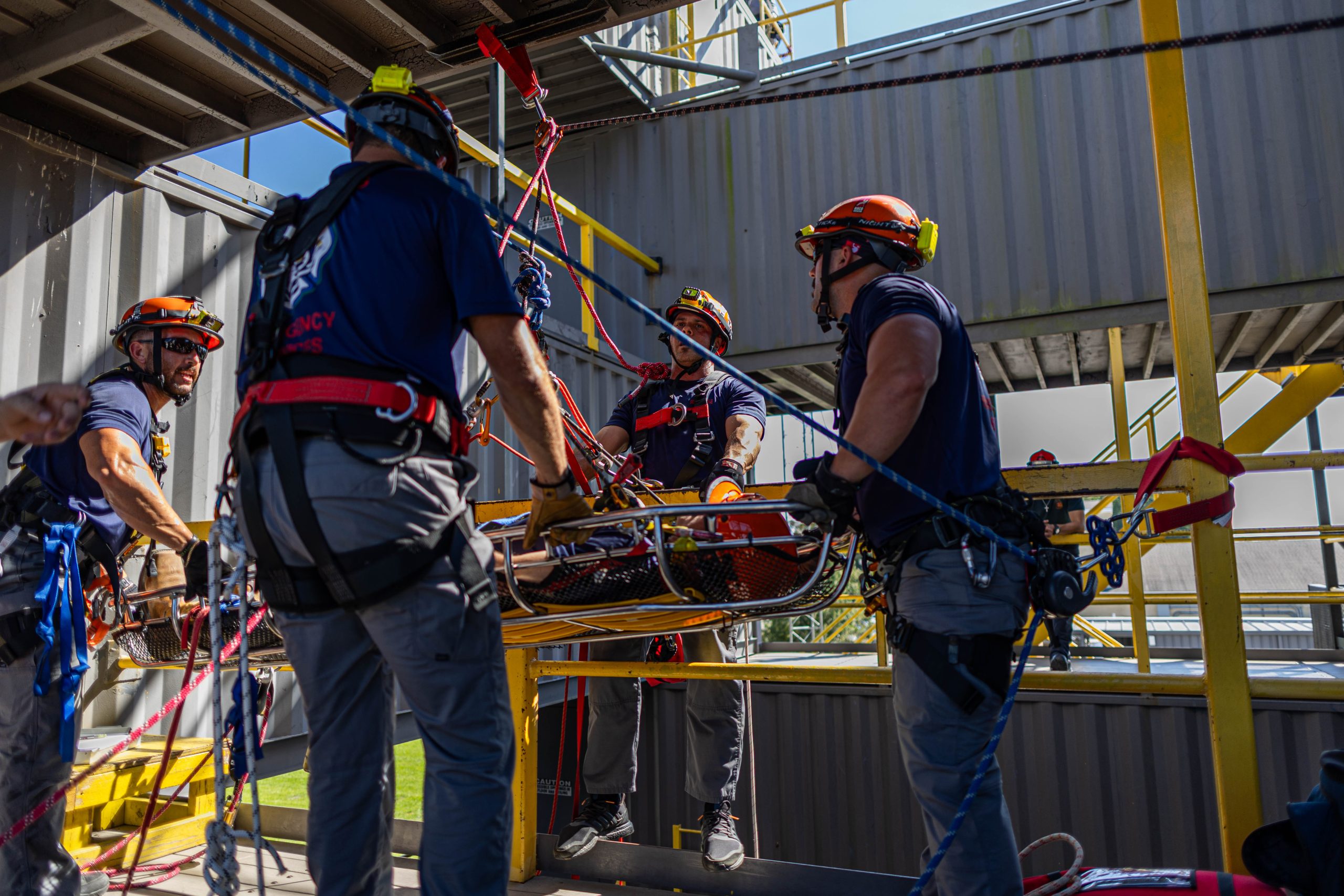
Roco offers several ways to hone your team’s individual skills while evaluating and improving overall team operations. A Team Performance Evaluation or Refresher Training is often the most effective way to address recurring gaps identified during reviews. For teams who want to “pressure-test” their skills in the most realistic environments, Roco Rescue Challenge 2026 offers an opportunity to see how decisions, communication, and execution hold up when it counts.
Subscribe to RescueTALK™
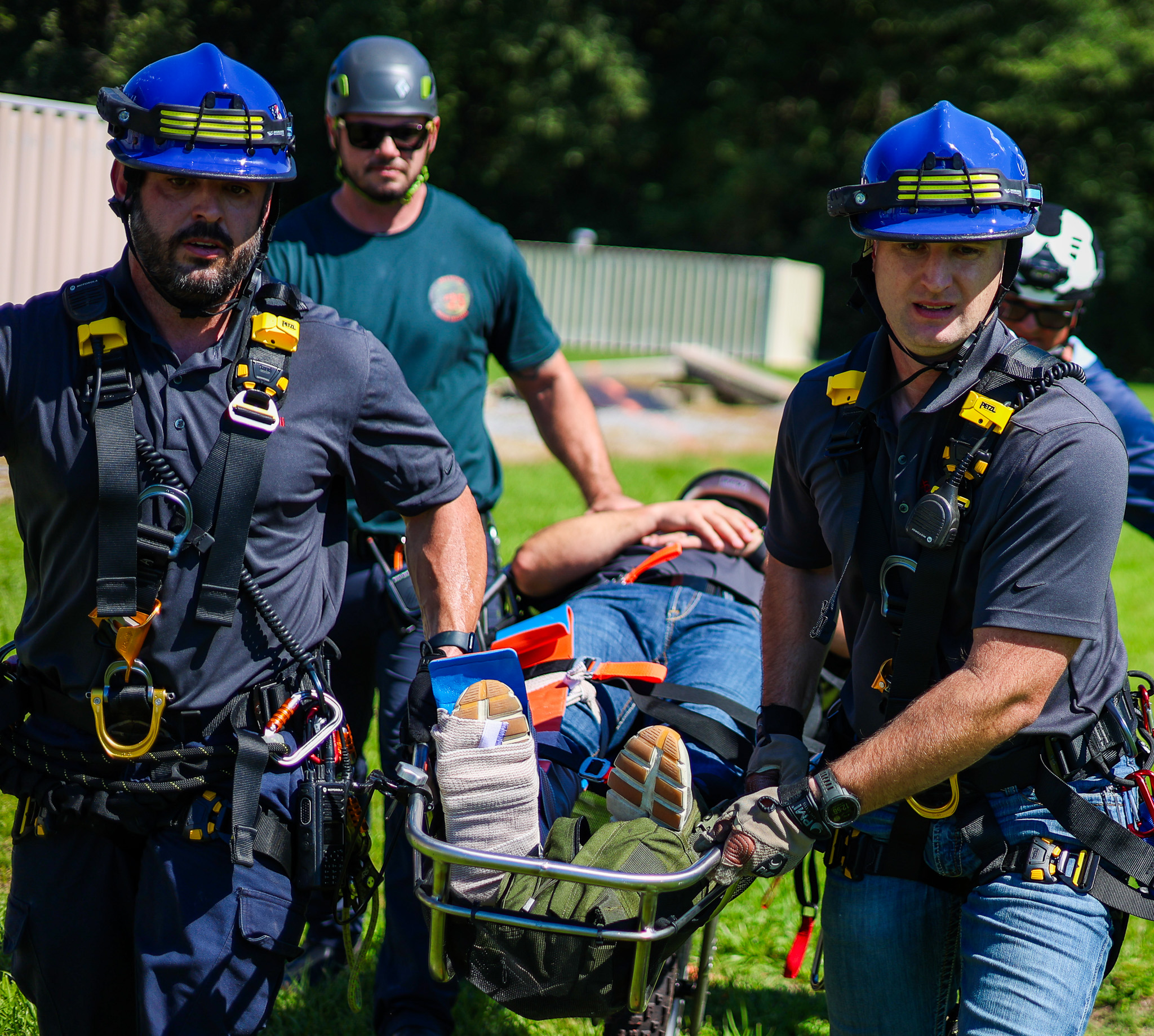
This year’s Roco Rescue Challenge was one for the books. For those unfamiliar, Roco Rescue Challenge is our annual event, going on its 33rd year, where industrial rescue teams from across the country put their skills to the test in a series of realistic rescue scenarios, individual, and team performance evaluations. It’s part training event, part competition, and all about sharpening skills, building camaraderie, and celebrating the rescue community.
We mixed things up this year with a backcountry-style rescue and a heavy lift station that pushed teams to apply their industrial rescue techniques in new environments. It was challenging, it was fun, and it showed why these rescuers are among the best in the business.
Seven teams joined us this year: Marathon Petroleum out of Robinson, Illinois; Exxon Baton Rouge Complex; Omaha Public Power District from Nebraska; CF Industries from Donaldsonville, Louisiana; Exxon BRPO; Flint Hills Resources from Corpus Christi, Texas; and Westlake Geismar. The competition was tight across the board, and every team showed incredible teamwork, problem-solving, and skill under pressure.
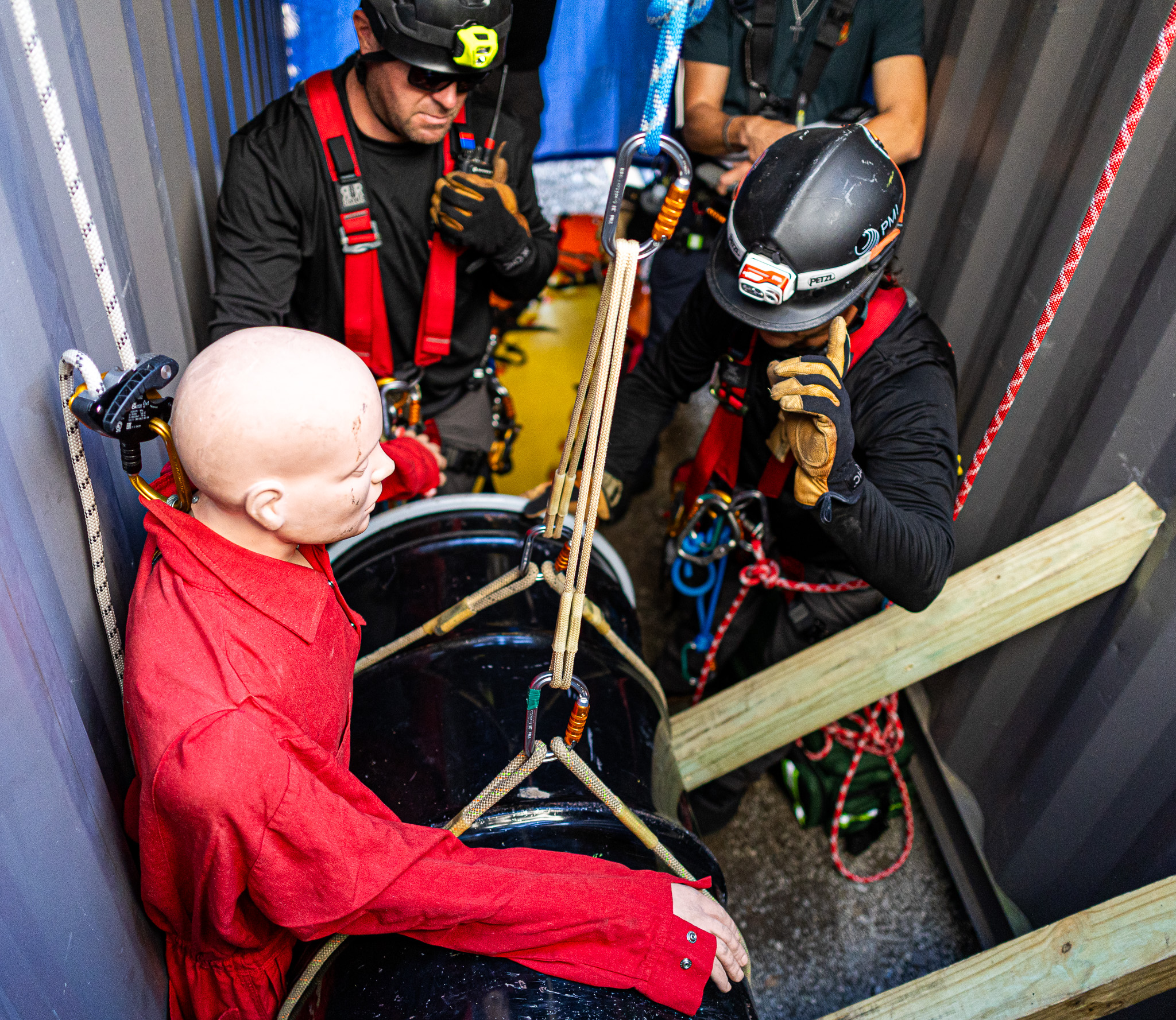
Omaha Public Power District took first in the individual performance evaluation (IPE). Exxon Baton Rouge earned first place in the team performance evaluation (TPE). CF Industries, Donaldsonville, claimed the overall Top Team award for the second time in three years. Congratulations to every participant. Your commitment to readiness and continuous improvement makes your facilities and your communities safer for everyone.
We couldn’t make this event happen without our sponsors and partners. This year we welcomed new sponsors including the Health and Safety Council Louisiana (HASC), Total Tent Solutions, and DT Cores and Company. They joined our longtime supporters Petzl, Harken, Anderson Rescue Systems, Baton Rouge Fire Department, CMC, and one of our oldest partners, Skedco. A big thank you also goes to Firehouse Subs for providing lunch and to the ASSP Greater Baton Rouge Chapter for holding their monthly meeting at the event. Our partners and supporters truly enrich this event and are an integral part of Rescue Challenge.
This year’s Challenge also had the largest number of observers we’ve ever hosted, including many safety professionals who were able to experience the rescue world up close for the first time. If you’ve ever wanted to attend, consider signing up as an observer next year. Lunch is provided, and you’ll walk away with some great Roco swag while being part of the action.
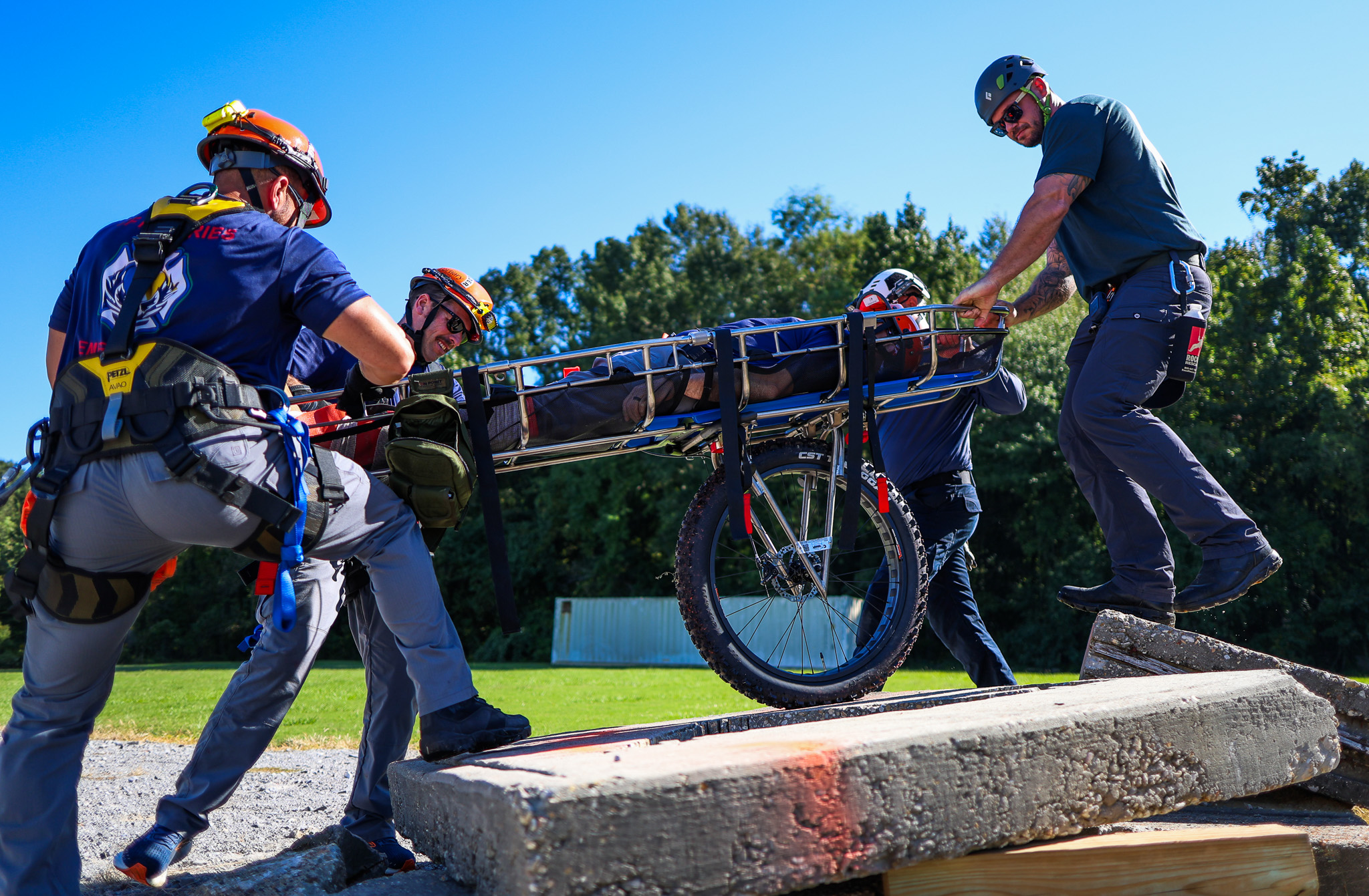
We’re already looking ahead to Roco Rescue Challenge 2026. The dates for next year are October 21-22, 2026. If your team is interested in competing or attending, follow the link below to learn more and sign up. Thanks again to all our teams, sponsors, observers, and supporters for another great year of Rescue Challenge. See you in 2026!
Learn More About Roco Rescue Challenge
Sign up as a team or as an observer
Check out our Youtube page in the meantime.
If you’re building a confined space program, stepping into a role that oversees confined space work, or reviewing a program you’ve managed for years, this is a useful place to start. Our Roco Rescue Compliance Tools page brings together key confined space regulations with clear explanations focused on rescue and the provisions that support it.
The material is curated by our safety and rescue leadership team, based on decades of hands-on experience in both municipal and industrial confined spaces. It’s intended to help you understand what applies, identify gaps, and evaluate whether your current approach still makes sense for your people and your rescuers. There are also additional resources like our safety posters covering everything from confined space types to fall protection. If you have questions beyond what’s on the page, give us a call or send an email. You’ll speak directly with someone who works in these environments every day.
This guide is provided as a complimentary resource only and regulations should be reviewed in their entirety.